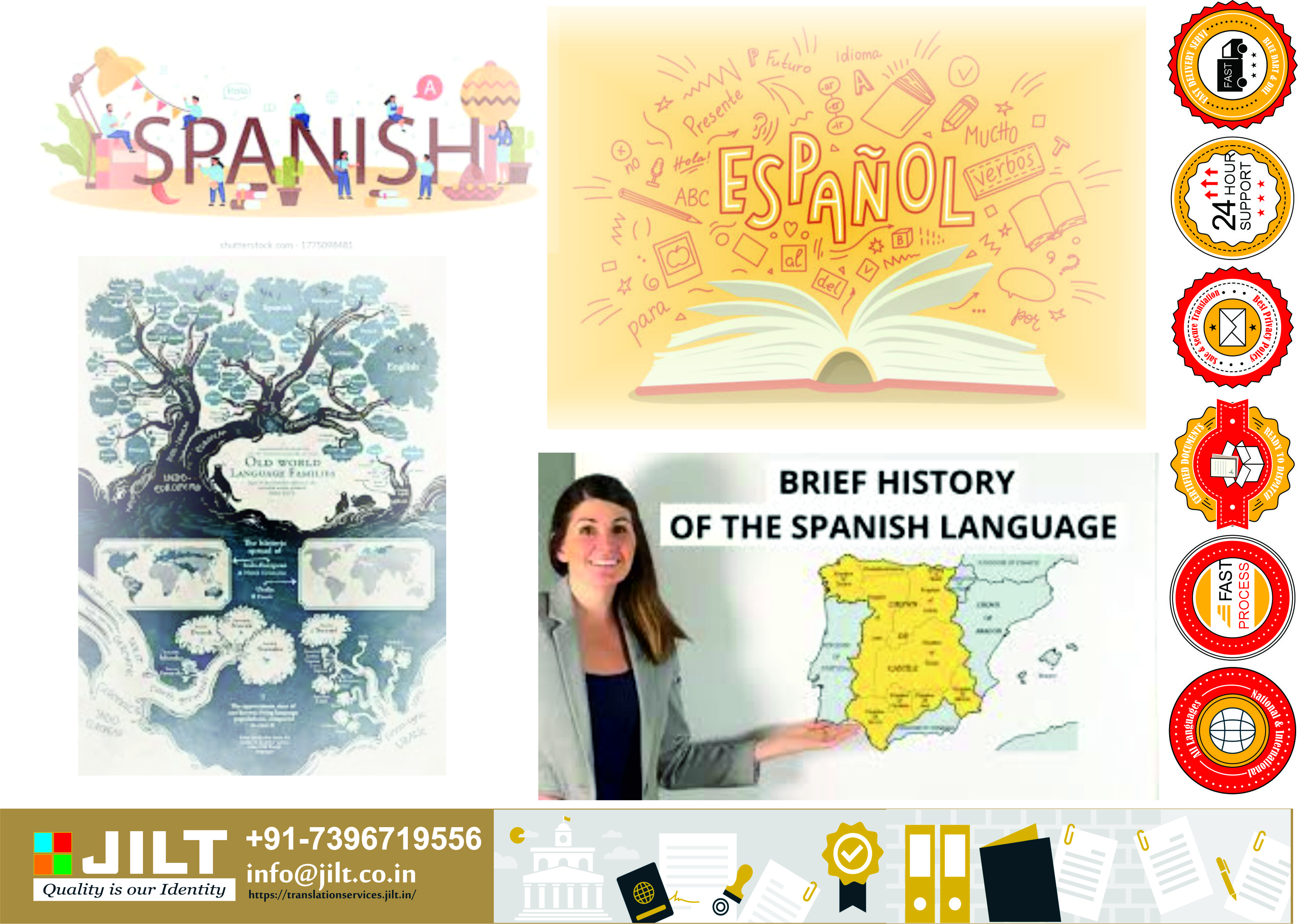
From where the Spanish has come, have you ever thought about that? How much has Spanish changed over time? How different has, Spanish become when it comes to speaking and hearing at different stages in its history.
The Spanish language is the result of thousands of years of language development and cultural influence.
The Spanish language has a long history and evolution.
Spanish is a descendant of Latin vulgar, and its origin is in Spain. The Roman language ruled the Iberian Peninsula for about 700 years. Latin originated under the impact of Basque, later Arabic, Keltiberian, and Visigothic.
The Spanish language is a complex and ancient language, especially because other languages and cultures have influenced it over the years. It is therefore important to have a reliable Spanish translation if you are targeting the Spanish market.
Before we begin, let us review some facts about the Spanish language to understand:
a) The main differences between Spanish and Latin are that the Latin names have disappeared, the diphthongization has occurred, and the consonants have become softer.
b) The Spanish-related language Mozarabic is communicated by Christians living in Muslim territory.
c) Catalan did not develop from the Spanish language, but originated separately from Latin. Since Spanish was actually the Castile language, the language in Spain itself is generally referred to as Castilian. The first content in Spanish was published in the 9th century.
What is the evolution of Spanish over the years?
The professional speakers at TED have always discussed how languages change and evolve, and how linguistics or groups provide significant insights into the past.
Following years of invasion and the settlement of various cultures in the Iberian Peninsula, the Spanish language, and its varied dialects, developed. These included the Christians from the Roman Empire, the Visigoths from Central Europe, as well as the Moors.
Spoken Latin in central and northern Spain developed in Castilian Spanish.
The northern dialect, then spread to the south, where it gave shade to local Romance dialects like Ladino or Judaeo-Spanish, and borrowed various words from Andalusian Arabic.
Colonization and the Spanish language are related.
The development of the Spanish language was also affected by another decisive moment in history.
The colonization of the United States began in the 15th century.
In 1492, Christopher Columbus led a group of Spanish “conquistadores” who came to the Caribbean.
It was considered "hispanización" to bring the Spanish language as well as Spanish traditions, including the catholic religion, into the continent.
The “hispanización” method has many challenges, but the biggest one is communication.
There are learning institutions to teach Catholicism in the Spanish language, which is a bit different from the local language.
For about 3 centuries, Spanish speakers lived in the area. Children and adolescents grew up, and Spanish started to spread and change in the area. So, the demand for good Spanish content translation has gone up.
Our company has a team of translators who can quickly and accurately translate and have the translation attested, if needed, for all languages. We translate into English, Urdu, Arabic, Spanish, German, Persian, French, Japanese, Italian, Korean, Russian, and all other Indians and local languages. Our professional proofreaders will check out the translation. We also offer a courier service to send finished documents to our customer’s addresses.







Official Channels