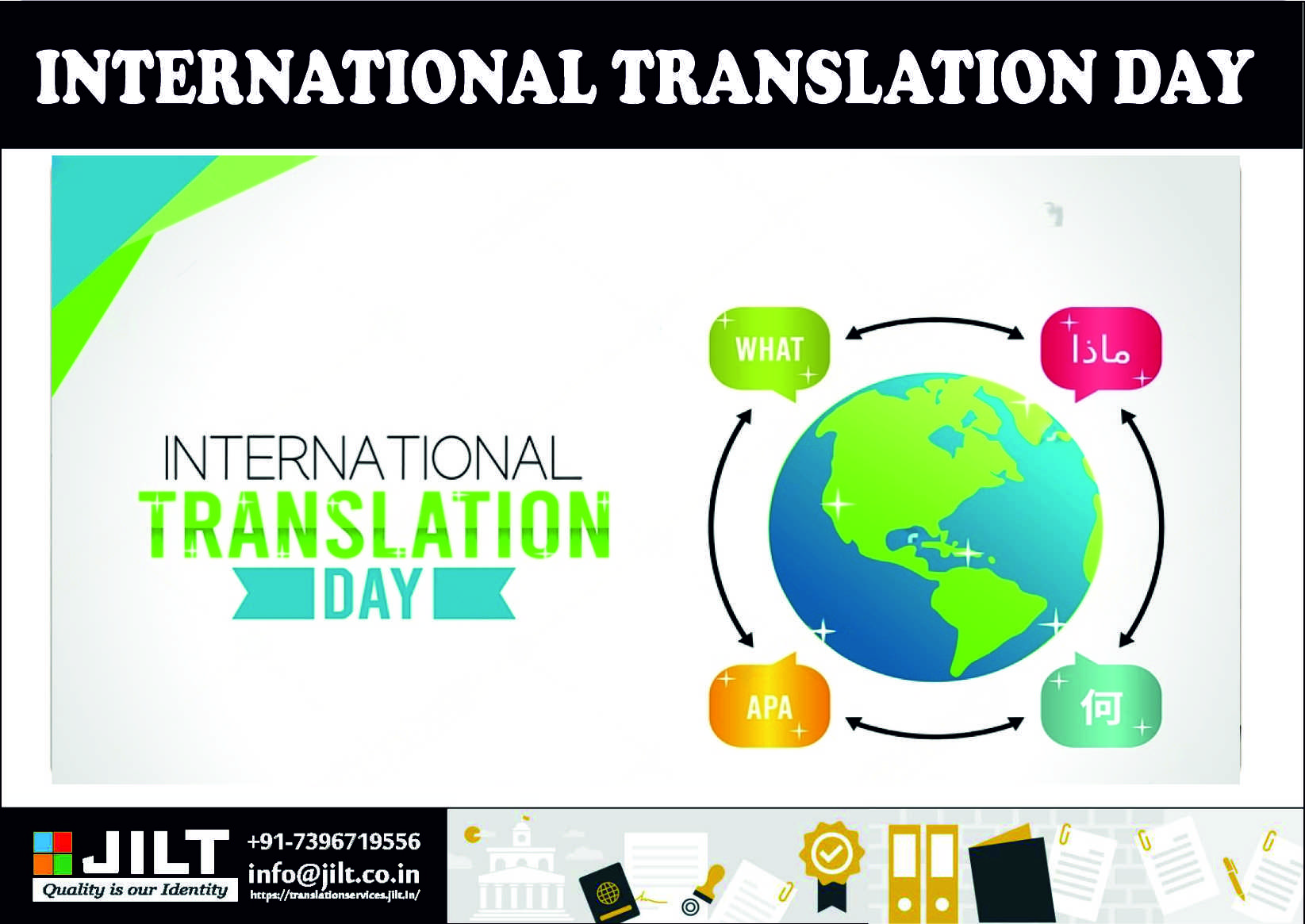
INTERNATIONAL TRANSLATION DAY: BRIDGING CULTURES AND CONNECTING THE WORLD
by Dr. Abu Mazhar Khalid Siddique - September 30, 2023
Translation is the bridge that connects cultures, ideas, and people across the globe. It is a powerful tool that allows us to communicate and understand each other, regardless of the languages we speak. International Translation Day, celebrated on September 30th each year, pays tribute to the art and significance of translation. In this 2000-word blog, we will delve into the history and significance of International Translation Day, exploring how it has evolved and why it matters in today's interconnected world.
The Origin of International Translation Day
The roots of International Translation Day can be traced back to the feast day of St. Jerome, a Christian scholar and priest from the 4th century. St. Jerome is renowned for his translation of the Bible into Latin, a version known as the Vulgate. His dedication to translating sacred texts played a pivotal role in making religious knowledge accessible to a wider audience. Consequently, St. Jerome is considered the patron saint of translators and linguists.
In recognition of St. Jerome's contributions to translation and language, the Catholic Church celebrated his feast day on September 30th. This date was chosen for International Translation Day, as it symbolizes the role of translation in disseminating knowledge and fostering mutual understanding.
The Significance of Translation
Translation is not merely a mechanical process of converting words from one language to another; it is an art form that requires a profound understanding of both the source and target languages, as well as the cultural nuances embedded within them. The significance of translation can be summarized in several key points:
Facilitating Communication: At its core, translation is about enabling communication between people who speak different languages. It removes language barriers and allows individuals from diverse linguistic backgrounds to exchange ideas, information, and emotions. Whether it's a book, a business contract, a medical report, or a work of art, translation ensures that the message is understood by a wider audience.
Preserving Cultural Heritage: Translation plays a vital role in preserving and promoting cultural heritage. It allows literature, folklore, and historical documents to be shared with a global audience, ensuring that the rich tapestry of human culture is not lost to linguistic boundaries. Works of literature like Homer's “Iliad” and Miguel de Cervantes' “Don Quixote” have been translated into numerous languages, making them accessible to people worldwide.
Fostering Diplomacy and Trade: In the realm of international relations, translation is a crucial tool of diplomacy and trade. Accurate translation diplomatic agreements and trade documents, helps nations engage in productive negotiations and maintain peaceful relationships. Without translation, misunderstandings, and conflicts could easily arise due to miscommunication.
Enhancing Global Understanding: In our interconnected world, translation contributes to global understanding and tolerance. It allows us to learn about different cultures, traditions, and perspectives. Translated works of philosophy, science, and history has broadened our horizons and expanded our knowledge of the world's diverse cultures and viewpoints.
The Evolution of International Translation Day
The celebration of International Translation Day has evolved over the years, reflecting the changing landscape of translation and its growing significance in a globalized world.
Early Celebrations: The first recorded celebration of International Translation Day dates back to 1953 when the International Federation of Translators (FIT) established the day to honor the profession of translation and promote the translation industry. FIT is a global network of associations of translators, interpreters, and terminologies, and it continues to play a leading role in promoting the importance of translation.
UNESCO's Recognition: In 1991, the United Nations Educational, Scientific and Cultural Organization (UNESCO) officially recognized September 30th as International Translation Day. UNESCO's involvement elevated the importance of the day on an international scale, emphasizing the role of translation in promoting cultural diversity and intercultural dialogue.
Themes and Activities: Each year, International Translation Day are celebrated with a specific theme that highlights different aspects of the translation profession and its role in society. Themes have ranged from “Translation and Diversity” to “Translation and Indigenous Languages,” reflecting the evolving challenges and opportunities in the field of translation.
Activities organized on this day include conferences, seminars, workshops, and literary events that bring together translators, linguists, writers, and language enthusiasts from around the world. These gatherings serve as platforms for discussing the latest developments in translation technology, sharing insights, and celebrating linguistic diversity.
The Digital Age and Translation
The advent of the digital age has brought about significant changes in the field of translation. Technology has revolutionized the way translations are done, making the process more efficient and accessible. Here are some key ways in which technology has impacted translation:
Machine Translation: Machine translation, powered by artificial intelligence and neural networks, has become increasingly sophisticated. Tools like Google Translate and DeepL are capable of providing quick translations for a wide range of languages. While they are useful for basic communication, they still fall short when it comes to preserving the nuances and cultural context of a text.
CAT Tools: Computer-assisted translation (CAT) tools have become indispensable for professional translators. These software applications assist translators by storing translation memories, suggesting terminology, and improving consistency in translations. They have streamlined the translation process and increased productivity.
Accessibility: Digital platforms and the internet have made translated content more accessible than ever before. Whether it's reading a news article in a foreign language or watching a foreign film with subtitles, people now have easy access to translated materials that broaden their horizons and connect them to the global community.
Challenges in Translation Today
Despite the advancements in translation technology, several challenges persist in the field:
Quality vs. Speed: While machine translation offers speed and convenience, it often sacrifices quality. Achieving a high level of accuracy, especially in specialized fields like medicine or law, requires human translators who understand the nuances of the content.
Cultural Nuances: Translating cultural nuances, idioms, and humor can be exceptionally challenging. These elements are deeply rooted in the source culture and may not have direct equivalents in the target language.
Protecting Indigenous Languages: Many indigenous languages are at risk of extinction. Translation efforts play a crucial role in preserving and revitalizing these languages, but the resources and support for such endeavors are often limited.
Ethical Considerations: Translators must grapple with ethical dilemmas, such as ensuring accurate translations of sensitive content or navigating issues related to censorship and propaganda in some cases.
The Role of Translators in Today's World
Translators are unsung heroes who work tirelessly behind the scenes to facilitate global communication. Their role goes beyond linguistic expertise; it involves cultural sensitivity, subject matter knowledge, and a commitment to conveying the true essence of a text. Translators act as cultural ambassadors, building bridges between different worlds.
In the age of globalization, translators are in high demand in various fields:
Literature: Translators bring the world's literary treasures to new audiences. Works of fiction, poetry, and non-fiction are translated to allow readers to explore different cultures and perspectives.
Business and Commerce: In the business world, accurate translation is essential for international trade, marketing, and negotiations. Companies rely on translators to bridge language gaps and ensure their global operations run smoothly.
Medicine and Healthcare: Medical and healthcare professionals require accurate translations of patient records, research papers, and pharmaceutical documentation to provide the best care to diverse populations
Legal Affairs: In the legal field, precision is paramount. Translators are essential for translating contracts, court documents, and legal proceedings in multilingual contexts.
Diplomacy and International Relations: Translators play a crucial role in diplomatic negotiations, ensuring that international agreements and treaties are accurately understood by all parties involved.
International Translation Day stands as a testament to the enduring importance of translation in our interconnected world. It is a day to celebrate the contributions of translators, linguists, and language professionals who make communication across linguistic boundaries possible.
As we reflect on the history and significance of International Translation Day, we recognize that the art of translation is more vital than ever. In an era of globalization and digital connectivity, translation serves as a lifeline that enables us to connect with people from different backgrounds, explore diverse cultures, and navigate the complexities of a multilingual world.
So, on this International Translation Day, let us express our gratitude to the dedicated individuals who work tirelessly to break down language barriers and promote understanding among all nations. Translation is not just a profession; it is a bridge that unites us and enriches our lives in countless ways.
Our organization employs native-speaking translators who can provide certified translation services in any language. We provide translation services in English (Urdu), Arabic (Spanish), German (French), Persian (Iranian), French (Italian), Japanese (Korean), Russian, and any other Indian or local language. Expert proofreaders at our company will inspect the translation. We also provide a courier service to deliver completed documents to our clients.
- Also Read :- Sales Contract Translation Service
- Also Read :- UNLOCKING OPPORTUNITIES: THE IMPORTANCE OF DEGREE CERTIFICATE TRANSLATION
- Also Read :- Statutory declaration translations (JILT - Certified Translation Services)
- Also Read :- Death certificate translation
- Also Read :- Police Clearance Certificate Translation Services
- Also Read :- Police report translations (JILT - Certified Translation Services)
- Also Read :- HOW TO GET DRIVING LICENSE IN SAUDI ARABIA AND VALUE WORLDWIDE.
- Also Read :- MOST LANGUAGES USED ON THE INTERNET FROM THE BEGINNING
- Also Read :- The procedure to acquire Police Clearance Certificate in India - PCC
- Also Read :- TRANSLATION SERVICES FOR TECHNOLOGY
Search
Categories
Archives by Month
Popular Blog
QUICK TRANSLATION QUOTE
Need help with a translation?
Get in touch with us
Whether you have a specific project you want to discuss, need a translation quote or simply want to discuss your requirements, do not hesitate to get in touch with us.







Social Networks